Hello.
I'm Olly.
Over fifteen years I've earned some of the world's largest companies hundreds of millions in returns by asking questions other people didn't think to ask.
Worked with














The Uncomfortable Why
Questions marketing would rather skip.
Short films that start somewhere familiar and end on a question I can't fully answer either. First episodes coming soon.
-
#01
Optimising to One Variable
Good-looking, still insufferable.
-
#02
Who's Going to Win the AI Race?
Have we even seen the Google yet?
-
#03
Brand vs Personalisation
Everything to everyone, eventually.
-
#04
Thinking Outside the Box
Try someone else's box.
Writing
Longer thoughts, same questions.
For when ninety seconds won't do. Essays on what marketing has quietly stopped asking, first published on LinkedIn.
Perspective
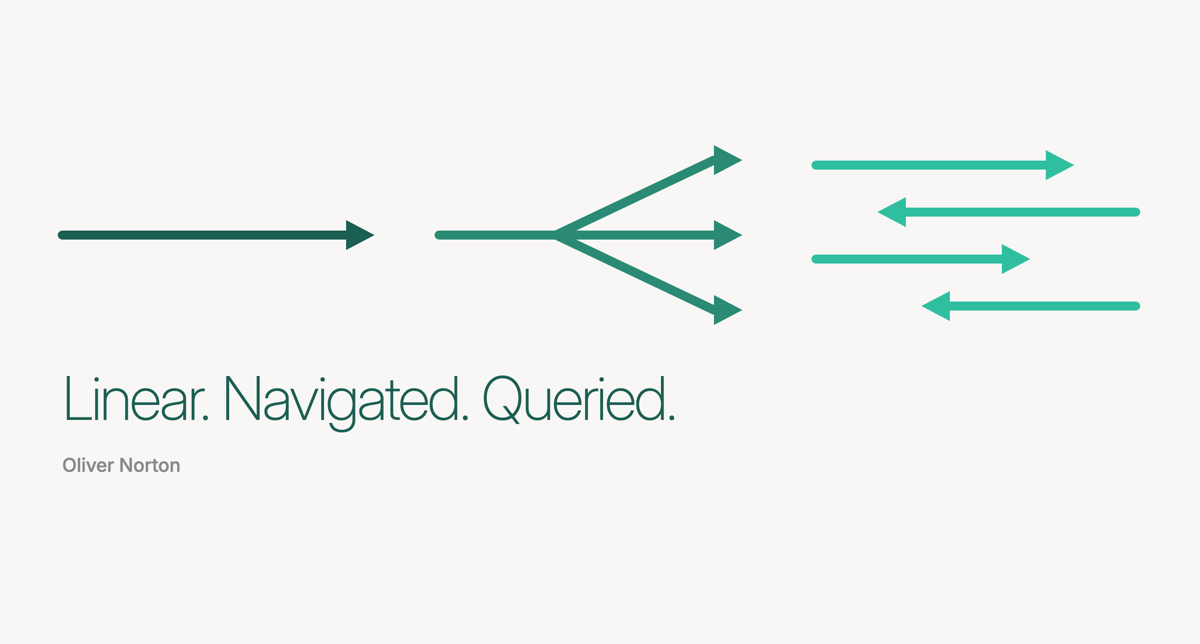
Linear. Navigated. Queried.
Why most brands are building for an era that's already over.
Read the essay →
Internet Killed the Marketing Star
In 2006 all the data came through one door. Then the internet added a few hundred more.
Read the essay →Practice
Past work
Some questions that paid off.
Why sell paint by the litre? Jotun's hull coating was really selling speed.
Jotun had a new hull coating that promised ships would lose no more than 1% of their speed over five years. It cost 20 to 30% more than the competition, on a repaint already running $2 to 5 million a ship, so buyers balked. The awkward question was why anyone was selling it as paint at all. We sold the efficiency instead, as a performance guarantee, which meant building a calculator that tracked each vessel against its expected performance in whichever ocean it happened to be. Jotun's marine business went on to grow 10.2% a year over the following decade.
What would Netflix do with prescribing data? Box sets, but for doctors.
Pharma ranks doctors by how much they prescribe, in ten tidy deciles. A doctor quietly moving patients to a competitor looks identical to one who's growing, right up until the numbers fall off a cliff. So we looked at direction of travel instead of volume, borrowing the clustering approach Netflix uses on viewing habits. The model was right about 248 of the 250 doctors we checked by hand. On the brand we piloted it with, it halted a run of quarterly declines and put the brand back into growth, and Klick went on to sell it to eight more clients for $2.2 million in billings.
Does anyone really buy by age bracket? Nobody, as it turns out. ROI doubled.
Marketers love a demographic. People, inconveniently, buy things because of the moment they're in, whether that's the hungry ten minutes before lunch or the life change that comes before a new car. At OMD we built segments around those moments, using research into what actually triggers a purchase, and tested them against the usual demographic targeting with proper control groups. Anchoring targeting in real need states doubled ROI against baseline, and on one rather memorable occasion increased it sixfold.
Was anyone actually listening? An impression only proves they were in the room.
I joined OMD Canada as its first Marketing Scientist, and in 2016 McDonald's Canada was spending $11.8 million a year on digital ads optimised for clicks, hunting for the rare person who visits a burger website before lunch. The results were poor, and the conclusion forming was that digital simply didn't work for McDonald's. The better question was what digital was actually for. TV and billboards existed to keep McDonald's front of mind, so we judged digital the same way, on whether the ad was actually seen. ROI doubled almost immediately, and once Meta's store-visit tracking arrived we used it to measure rather than to target, taking digital ROI to more than five times where it started within two years.
For fifteen years I’ve been the one asking whether the marketing actually worked, and what we’d need to implement to find out. I asked it for brands like McDonald’s, Apple, and Mitsubishi, then across pharma marketing, an industry with more data than it knew what to do with. These days I ask it from the platform side at Snapchat. Nodal Strategy, my consultancy, is where I’m taking my questions next, into what happens to brands when customers stop navigating them and start talking to them. I still ask why more often than is strictly polite.
The long version →